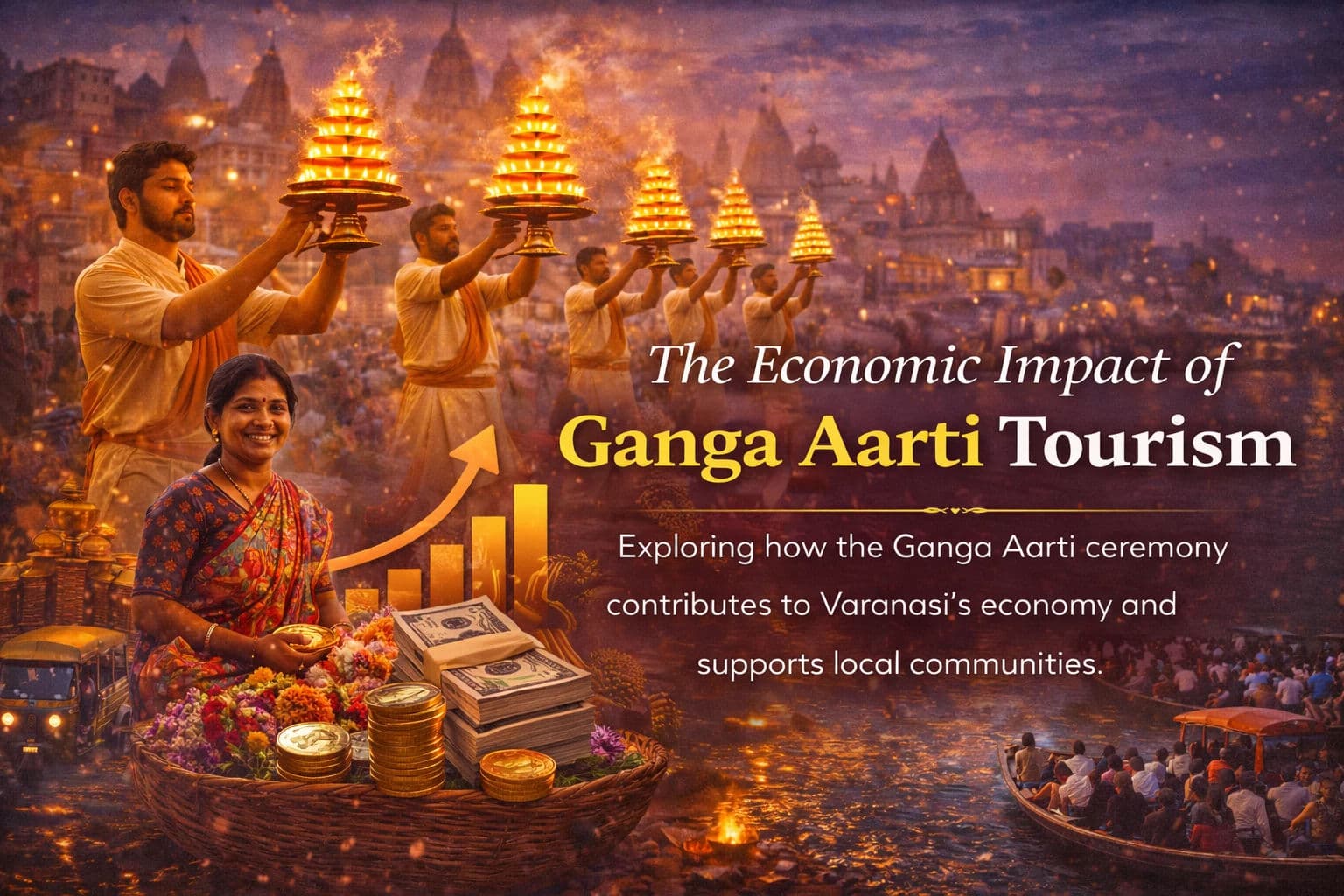
The Economic Impact of Ganga Aarti Tourism
Exploring how the Ganga Aarti ceremony contributes to Varanasi's economy and supports local communities.
Introduction
The Ganga Aarti ceremony has become a significant economic driver for Varanasi, supporting thousands of jobs and contributing millions to the local economy. This ancient ritual has evolved into a major tourist attraction that benefits multiple sectors of the community.
Direct Employment Opportunities
Direct employment opportunities abound in the tourism industry. Priests, musicians, boat operators, and tour guides rely on the steady stream of visitors drawn to the evening ceremony. The ceremony supports an entire ecosystem of service providers, from rickshaw pullers to street vendors.
Hospitality and Tourism Benefits
Hospitality businesses thrive on Aarti tourism. Hotels, guesthouses, and restaurants see increased occupancy during peak seasons. The ceremony's timing in the evening creates demand for dinner services and accommodation packages that include Aarti viewing.
Cultural Preservation and Support
Cultural preservation efforts receive economic support through tourism revenue. Funds from visitor donations and ticket sales help maintain the ghats and support the performers who keep this ancient tradition alive. This creates a sustainable model for cultural heritage preservation.
Indirect Economic Effects
The ripple effects extend to local artisans and craftsmen. Increased demand for traditional items like oil lamps, incense, and ceremonial accessories supports local manufacturing and handicraft industries. Farmers benefit from demand for flowers and other ritual materials.
Transportation services see significant business from Aarti visitors. Auto-rickshaws, taxis, and boat services transport tourists to and from the ghats. The ceremony's popularity has led to infrastructure improvements that benefit the entire community.
Small businesses along the ghats have transformed their operations to cater to tourists. Shops selling religious items, souvenirs, and refreshments do brisk business during Aarti hours. This economic activity supports families and creates entrepreneurial opportunities.
Challenges and Sustainable Tourism
The economic impact extends beyond Varanasi. National and international tourism promotion featuring Ganga Aarti brings visitors to other parts of India, supporting the broader tourism industry. The ceremony serves as a gateway attraction that introduces visitors to India's rich cultural heritage.
However, sustainable tourism practices are crucial to ensure long-term benefits. Balancing economic development with cultural preservation and environmental protection remains an ongoing challenge. The community continues to work toward responsible tourism that benefits all stakeholders while preserving the sacred nature of the ceremony.
Economic Statistics and Growth
Recent studies show that Ganga Aarti tourism contributes over $50 million annually to Varanasi's economy. The ceremony attracts more than 2 million visitors yearly, with international tourists accounting for approximately 30% of attendees. This influx of visitors supports over 15,000 direct and indirect jobs in the tourism sector.
Revenue Streams
Multiple revenue streams fuel the local economy. Direct ticket sales for viewing areas, donations to performers, and sales of ceremonial items create immediate economic benefits. Indirect revenues come from increased hotel bookings, restaurant visits, and transportation services that extend visitors' stays in the city.
Job Creation Across Sectors
The ceremony creates employment opportunities across various sectors. Traditional artisans benefit from increased demand for brass lamps and ceremonial instruments. Technology professionals find work in tourism apps and virtual reality experiences. Service industry workers gain employment in hospitality and transportation.
Women and Minority Empowerment
Economic benefits extend to traditionally underserved groups. Women artisans create and sell decorative items, while minority communities benefit from increased tourism that promotes cultural exchange. The ceremony's popularity has created micro-enterprises that empower local entrepreneurs.
Infrastructure Development
Tourism revenue has funded infrastructure improvements throughout Varanasi. Better roads, lighting, and sanitation facilities benefit both tourists and residents. The ceremony's economic impact has led to upgraded ghats and improved public spaces that enhance quality of life for the entire community.
Educational Opportunities
The economic growth spurred by Aarti tourism has created educational opportunities. Local schools and training programs teach tourism-related skills, while universities offer courses in cultural tourism and heritage management. This investment in human capital ensures long-term economic sustainability.
Environmental Conservation Funding
A portion of tourism revenue supports environmental conservation efforts. River cleanup initiatives, wildlife protection programs, and sustainable development projects benefit from Aarti-related funding. This creates a positive cycle where tourism supports the very environment that makes the ceremony possible.
Global Economic Connections
The ceremony creates global economic connections that extend beyond local benefits. International visitors bring foreign currency that strengthens India's economy. Cultural exchange programs foster business relationships and investment opportunities that benefit multiple stakeholders.
Technology and Innovation Investment
Economic growth has spurred technology investments in Varanasi. Digital platforms for booking and virtual experiences create new business opportunities. Innovation in sustainable tourism practices attracts investment and creates modern jobs alongside traditional ones.
Community Health Improvements
Tourism revenue has improved community health infrastructure. Better medical facilities, sanitation systems, and public health programs benefit local residents. The economic boost has enabled investments in healthcare that improve overall community well-being.
Cultural Industry Growth
The ceremony has stimulated growth in the cultural industry. Music schools, dance academies, and cultural centers thrive on increased interest in traditional arts. This cultural renaissance creates economic opportunities while preserving heritage.
Seasonal Economic Patterns
Economic benefits vary by season, with peak festival periods bringing maximum revenue. Understanding these patterns helps businesses plan for cyclical demand and ensures stable employment throughout the year.
Youth Employment and Training
Young people benefit from tourism-related employment opportunities. Training programs prepare youth for careers in hospitality, guiding, and cultural interpretation. This investment in the next generation ensures the industry's long-term viability.
Women Economic Empowerment
Women have particularly benefited from Aarti tourism. Increased demand for handicrafts and home-based businesses has created income opportunities for women who might otherwise be excluded from the formal workforce.
Rural-Urban Economic Linkages
The ceremony creates economic linkages between rural and urban areas. Farmers from surrounding regions supply flowers and materials, while urban businesses provide services. This interconnected economy strengthens regional development.
Digital Economy Growth
The digital economy has grown significantly due to Aarti tourism. Online booking platforms, social media marketing, and virtual experiences create new revenue streams and employment opportunities in the digital sector.
Sustainable Development Goals
Aarti tourism contributes to several UN Sustainable Development Goals. Economic growth supports poverty reduction, while cultural preservation promotes quality education and gender equality. Environmental conservation efforts align with climate action goals.
Future Economic Projections
Economic projections for Aarti tourism are positive, with expected growth driven by increasing global interest in spiritual tourism. Sustainable development strategies will ensure that economic benefits continue to support community well-being and cultural preservation.
Measuring Economic Impact
Comprehensive studies measure the ceremony's economic impact through various metrics. Direct spending, job creation, multiplier effects, and value-added contributions all demonstrate the ceremony's significant role in Varanasi's economy.
Policy and Governance
Effective policy and governance ensure that economic benefits are distributed equitably. Community involvement in tourism planning ensures that development serves local needs while maintaining the ceremony's sacred character.
Conclusion
The Ganga Aarti ceremony has become a significant economic driver for Varanasi, supporting thousands of jobs and contributing millions to the local economy. This ancient ritual has evolved into a major tourist attraction that benefits multiple sectors of the community.
You Might Also Like