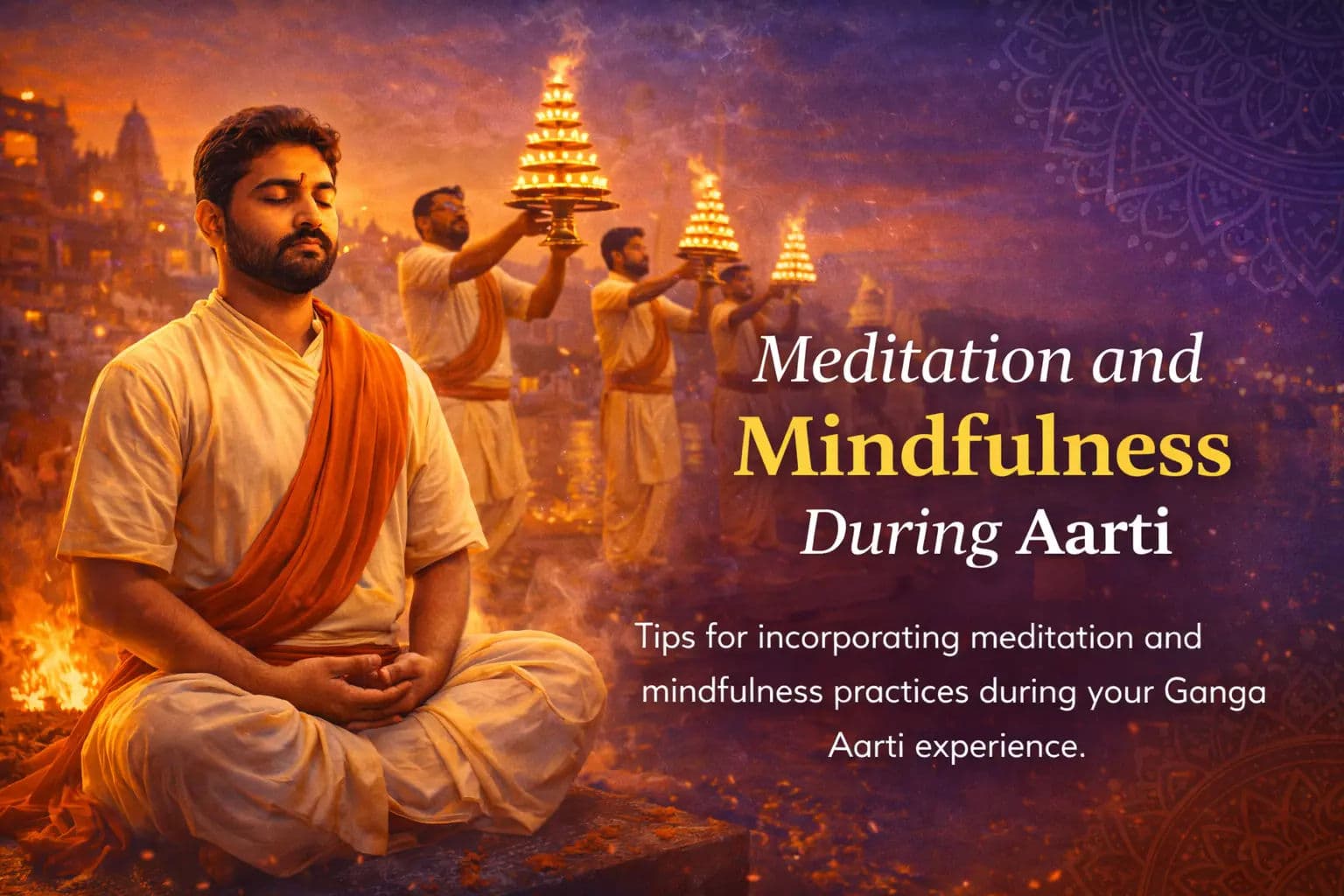
Meditation and Mindfulness During Aarti
Tips for incorporating meditation and mindfulness practices during your Ganga Aarti experience.
Introduction to Meditation During Aarti
The Ganga Aarti provides a perfect setting for meditation and mindfulness practice. The rhythmic chants, synchronized movements, and ambient atmosphere create an ideal environment for spiritual contemplation. Begin by finding a comfortable seated position and focusing on your breath. Allow the sounds of the ceremony to guide your meditation, using the chants as a mantra.
Mindfulness in the Ceremony
Practice mindfulness by observing the flames of the lamps, the flow of the river, and the devotion of fellow participants. This heightened awareness can lead to profound insights and spiritual experiences. Remember that meditation during Aarti is about being present in the moment. Let go of expectations and allow the divine energy to flow through you naturally.
Structured Spiritual Engagement
The Ganga Aarti ceremony offers a unique opportunity to deepen your meditation and mindfulness practice through structured spiritual engagement. This ancient ritual provides natural focal points and rhythmic elements that enhance contemplative states.
Pre-Ceremony Preparation
Preparation begins before you arrive at the ghat. Set a clear intention for your practice. Are you seeking stress relief, spiritual insight, or simply presence? This intention becomes your anchor throughout the ceremony.
Physical Comfort for Meditation
Physical comfort is essential for effective meditation. Choose a stable seated position that you can maintain for 45-60 minutes. Bring cushions or blankets if needed. Dress in layers to accommodate the changing evening temperatures. Health considerations include staying hydrated, eating light meals, and bringing necessary medications. The ceremony involves sitting for extended periods, so consider any physical limitations. Some visitors practice gentle yoga or stretching beforehand.
Logistical Planning
Logistical planning prevents unnecessary stress. Research transportation options to and from the ghats. Check weather forecasts and have contingency plans. If booking through a service, confirm all details in advance.
Opening Moments of Practice
The opening moments of the ceremony offer an ideal time to settle into meditation. As the conch shell sounds, use this as a signal to begin your practice. Focus on the sound's vibration as it resonates through your body, creating an immediate sense of presence.
Breath Awareness Techniques
Breath awareness forms the foundation of your practice. Coordinate your breathing with the ceremony's rhythm. Inhale as the lamps are raised, exhale as they are lowered. This synchronization creates a natural meditative flow.
Mantra Meditation
The mantras provide powerful meditation anchors. Even if you don't understand Sanskrit, allow the sounds to wash over you. Repeat familiar phrases mentally, using them as mantras for your meditation. The collective chanting creates a sonic field that amplifies individual practice.
Visual Mindfulness
Visual elements offer rich opportunities for mindfulness. Observe the flames dancing in the oil lamps, seeing each flicker as a metaphor for impermanence. Watch the river's flow, contemplating the nature of change. Notice how the light reflects on the water, creating natural mandalas.
Body Awareness Practice
Body awareness enhances the experience. Feel the evening breeze on your skin, the ground beneath you, the air filling your lungs. This embodied presence grounds you in the moment and deepens your connection to the sacred space.
Emotional Processing
Emotional awareness allows you to process feelings that arise. The ceremony's beauty may evoke joy, the chants may touch deep emotions, the collective energy may inspire awe. Observe these feelings without judgment, allowing them to flow through you.
Communal Energy Connection
The communal aspect adds depth to your practice. Feel the shared energy of hundreds of participants, recognizing your place in this larger field of consciousness. This interconnectedness amplifies the meditative experience.
Mindful Listening
Mindful listening develops throughout the ceremony. Beyond the main chants, notice the subtle sounds-the river's gentle flow, distant temple bells, the soft shuffle of feet. This expanded awareness creates a rich sensory tapestry for meditation.
Transition and Conclusion
The ceremony's conclusion offers a natural transition from formal practice. As the final lamps are offered, gradually return your awareness to the external world. Carry the meditative state with you as you depart.
Post-Ceremony Integration
Post-ceremony integration is crucial. Spend time reflecting on your experience. Journal about insights gained, emotions felt, or new awareness developed. This processing deepens the benefits of your practice.
Building a Regular Practice
Regular attendance builds a powerful meditation habit. Each ceremony becomes a touchstone for your practice, creating cumulative benefits over time. The familiar structure provides consistency in an unpredictable world.
Extending Mindfulness to Daily Life
Mindfulness extends beyond the ceremony itself. Practice carrying the attentive awareness cultivated during Aarti into daily life. Notice how the skills developed on the ghats enhance your everyday mindfulness. The Ganga Aarti teaches that meditation need not be separate from life-it can be woven into meaningful experiences.
Sacred Rituals as Meditation
The ceremony demonstrates how sacred rituals can serve as vehicles for profound contemplative practice. Different meditation styles find expression in the Aarti setting. Vipassana practitioners focus on sensory experience, transcendental meditators use the mantras directly, mindfulness practitioners observe the unfolding ceremony. The flexible structure accommodates various approaches.
Natural Meditation Environment
The natural setting enhances meditative depth. The river represents the flow of consciousness, the sunset symbolizes transition, the open sky suggests boundlessness. These elements create a natural meditation hall of extraordinary beauty.
Therapeutic Benefits
The therapeutic benefits of Aarti meditation are well-documented. Studies show that participants experience reduced stress, improved focus, and enhanced emotional regulation. The combination of sound, movement, and community creates a holistic healing experience.
Building Resilience
The practice builds resilience against modern life's challenges. Regular participation develops coping skills and emotional intelligence. The ceremony provides tools for navigating stress and uncertainty with greater equanimity.
Cultural Integration
Cultural integration adds richness to the practice. Understanding Hindu symbolism deepens the meditative experience. The river's spiritual significance, the lamps' symbolic meaning, and the mantras' sacred power all contribute to profound contemplative states.
Mindfulness in Action
The Ganga Aarti serves as a living example of mindfulness in action. The priests' precise movements, the synchronized chanting, and the attentive participation all demonstrate focused awareness. Observing these elements can teach valuable lessons in presence and concentration.
Optimal Timing for Practice
The ceremony's timing aligns with natural circadian rhythms. The sunset hour promotes relaxation and introspection, creating optimal conditions for meditation. This natural timing enhances the practice's effectiveness.
Group Meditation Dynamics
Group dynamics create unique meditative opportunities. The collective intention amplifies individual practice, creating shared fields of consciousness. This communal meditation offers insights into interconnectedness and unity.
Comprehensive Practice Approach
The practice extends to preparation and follow-up activities. Pre-ceremony meditation sets intentions, while post-ceremony reflection integrates insights. This comprehensive approach maximizes the transformative potential.
Personal and Communal Balance
The Ganga Aarti demonstrates how meditation can be both personal and communal. Individual contemplation combines with collective worship, creating multi-layered spiritual experiences. This integration offers models for modern meditation communities.
Learning Patience and Acceptance
The ceremony teaches patience and acceptance. Unpredictable elements like weather or crowds become opportunities for mindfulness practice. Learning to embrace the present moment regardless of circumstances builds true meditative skill.
Therapeutic Applications
The practice has therapeutic applications beyond spiritual growth. Participants report improved sleep, reduced anxiety, and enhanced overall well-being. The regular rhythm of the ceremony creates stability in often chaotic lives.
Accessibility for Beginners
The Ganga Aarti offers accessible meditation for beginners. No prior experience is needed - the ceremony provides all the structure and guidance required. This inclusivity makes profound spiritual practice available to everyone.
Advanced Practice Opportunities
Advanced practitioners find new depths in the Aarti experience. The ceremony's complexity offers endless opportunities for exploration and insight. Long-term participants discover increasingly subtle layers of meaning and experience.
Emotional Intelligence Development
The practice builds emotional intelligence through mindful observation. Witnessing the full spectrum of human emotion during the ceremony develops compassion and understanding. This emotional awareness extends to daily interactions.
Sacred Space for Contemplation
The Ganga Aarti creates sacred space for meditation. The designated time and place provide dedicated opportunities for contemplation, countering the distractions of modern life. This structured approach makes regular practice more achievable.
Multisensory Meditation
The ceremony's sensory richness enhances meditative states. The combination of sight, sound, and feeling creates immersive experiences that deepen concentration and awareness. This multisensory approach is particularly effective for meditation.
Mental Health Applications
The practice has applications in stress management and mental health. Regular participation provides tools for managing anxiety, depression, and emotional challenges. The ceremony offers natural therapeutic benefits.
Ritual as Meditation Framework
The Ganga Aarti demonstrates the power of ritual in meditation. The structured format provides framework and meaning, making contemplative practice more engaging and sustainable. This ritualized approach appeals to those who find pure meditation challenging.
Community Building Through Practice
The practice builds community through shared experience. Meditation becomes a collective activity, fostering connection and support among participants. This social dimension enhances the individual benefits of the practice.
Mindfulness of Impermanence
The ceremony teaches mindfulness of impermanence. The flowing river, flickering lamps, and changing light all remind us of life's transient nature. This awareness deepens philosophical understanding and acceptance.
Meditation for All Life Stages
The Ganga Aarti offers meditation for all life stages. Children, adults, and elders all find appropriate ways to engage. The ceremony's flexibility accommodates different developmental needs and capacities.
Educational Value
The practice has educational value beyond personal growth. Participants learn about Indian spiritual traditions, cultural practices, and philosophical concepts. This knowledge enhances both practice and understanding.
Lasting Meditative Habits
The Ganga Aarti creates lasting meditative habits. The powerful experiences motivate continued practice at home, creating ripple effects that extend far beyond the ceremony itself. This inspiration is one of the ceremony's greatest gifts.
Unity of Meditation and Devotion
The ceremony demonstrates the unity of meditation and devotion. The practices are not separate but complementary, creating holistic spiritual experiences. This integration offers comprehensive paths to awakening.
Ultimate Meditation Experience
The Ganga Aarti provides meditation in its most beautiful form - not as an isolated practice, but as a living expression of spiritual connection. Through this sacred ritual, participants discover that meditation is not just a technique, but a way of being fully present to the divine in every moment.
You Might Also Like