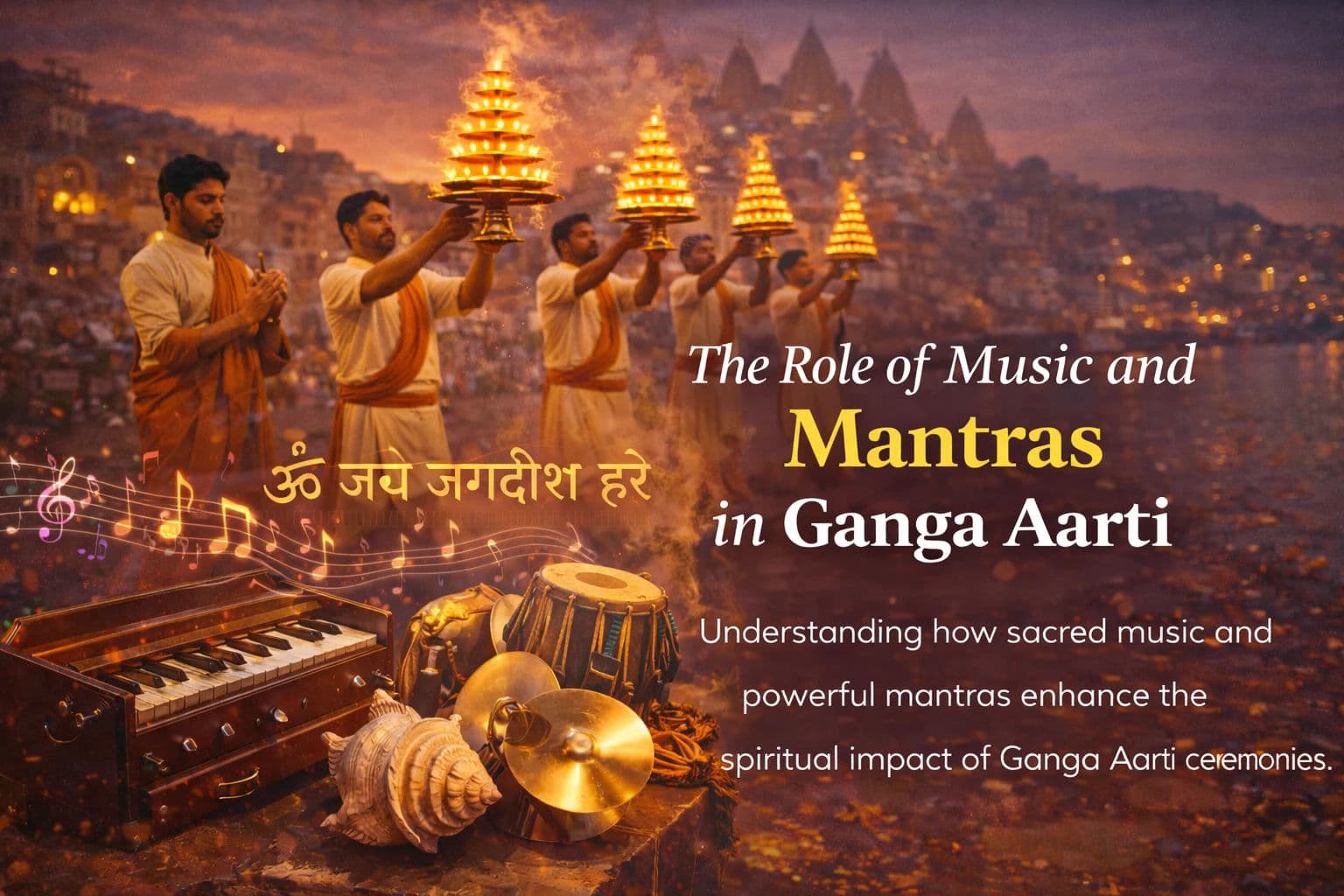
The Role of Music and Mantras in Ganga Aarti
Understanding how sacred music and powerful mantras enhance the spiritual impact of Ganga Aarti ceremonies.
Introduction to Musical Elements
The musical and mantra elements of Ganga Aarti create a powerful atmosphere that elevates the spiritual experience. Understanding these components helps you appreciate the ceremony's depth and beauty.
The music serves as a bridge between the physical and spiritual realms, carrying prayers and intentions to the divine. Traditional instruments like cymbals, drums, and conch shells create rhythmic foundations that guide the ceremony's flow.
The mantras, sung in Sanskrit, carry ancient wisdom and vibrational power that resonates through participants. The musical structure follows classical Indian ragas, each chosen for its specific spiritual qualities and emotional resonance.
The combination of melody, rhythm, and sacred text creates a multisensory experience that touches both heart and soul. The music begins softly, building gradually to create waves of devotion that wash over the audience.
Each instrument plays a specific role in the ceremony's progression, from the opening invocations to the climactic lamp offerings. The mantras themselves contain layers of meaning, from literal translations to esoteric spiritual teachings.
Understanding these elements transforms passive observation into active participation in the sacred ritual.
Sacred Instruments and Their Significance
The musical tradition of Ganga Aarti represents centuries of devotional practice. The compositions have been refined over generations, each element carefully chosen for its spiritual potency.
The instruments used in Ganga Aarti each carry symbolic meaning. The conch shell represents the primordial sound of creation, calling devotees to attention. The cymbals mark sacred time, punctuating important moments in the ritual.
The drums provide the heartbeat of the ceremony, maintaining rhythmic continuity. The harmonium provides melodic foundation, its notes carrying the mantras to the heavens. The bell announces transitions between ritual phases, clearing space for new energies.
Each instrument contributes to the overall symphony of devotion. The instruments are played with specific techniques that maximize their spiritual impact. The conch is blown in particular patterns that create auspicious sounds.
The cymbals are struck with precise timing to mark sacred moments. The drums maintain steady rhythms that induce meditative states. The harmonium is played with circular breathing techniques that create continuous sound waves.
These techniques have been developed over centuries to optimize the music's spiritual effectiveness.
The Power of Mantras
The mantras chanted during Ganga Aarti contain profound spiritual teachings. The primary mantra, 'Om Jai Jagdish Hare,' praises the universal Lord in all forms. Other verses honor the Ganges River as divine mother and spiritual purifier.
The Sanskrit language itself carries vibrational power, with each syllable designed to activate specific energy centers in the body. The repetitive chanting creates a meditative state that opens participants to higher consciousness.
The mantras contain embedded spiritual technologies designed to elevate consciousness. The specific combinations of sounds create resonance patterns that activate different chakras or energy centers.
The repetitive nature of the chanting induces theta brain wave states associated with deep meditation and spiritual insight. The mantras contain affirmations of divine qualities and spiritual truths. Regular chanting reinforces positive spiritual attitudes and beliefs.
The mantras are sung with precise intonation to maximize their energetic impact. The correct pronunciation ensures the sounds carry their intended spiritual vibration. This attention to detail preserves the tradition's effectiveness.
The mantras are designed to be easily memorized and repeated. The simple, repetitive structures allow participants to join in chanting. This accessibility democratizes the spiritual experience.
The mantras contain invocations that call forth divine presence. The specific words and melodies attract spiritual energies. This calling forth creates tangible divine connection.
Musical Structure and Raga Tradition
The music follows traditional ragas that correspond to different times of day and spiritual qualities. Evening ragas like Bhairavi and Malkauns create contemplative, devotional atmospheres perfect for sunset ceremonies.
The ragas chosen for Ganga Aarti emphasize surrender, devotion, and divine connection. The musical structure builds gradually, mirroring the journey from individual consciousness to universal awareness.
The opening verses establish sacred space and invoke divine presence. The main body of the Aarti builds devotional energy through rhythmic chanting and instrumental accompaniment.
The climax coincides with the lamp offerings, where music and light combine in ecstatic celebration. The closing verses bring the energy back to earth, blessing participants and the surrounding environment.
The music follows mathematical principles that create harmonious sound patterns. The ratios and intervals used correspond to sacred geometry and cosmic proportions. This mathematical precision contributes to the music's spiritual power.
The musical tradition includes call-and-response elements that engage the audience. Participants are invited to join in chanting, creating active participation. This inclusion transforms observers into co-creators of the sacred space.
The mantras are sung with varying tempos to create different energetic effects. Slow, meditative chanting induces deep contemplation. Faster passages create waves of ecstatic energy. This dynamic range addresses different spiritual needs.
Spiritual Impact and Benefits
The musical elements create emotional waves that carry participants through different states of consciousness. Moments of quiet contemplation alternate with waves of ecstatic devotion. The music guides the emotional journey, helping participants release worldly concerns and open to divine grace.
The collective singing creates a powerful group energy that amplifies individual experience. When many voices join in harmony, the vibrational field becomes exponentially stronger. This collective resonance creates healing frequencies that benefit all participants.
The music serves as a universal language that transcends cultural and linguistic barriers. Even those unfamiliar with Sanskrit can feel the emotional power of the chanting. The melodies carry archetypal energies that speak directly to the human soul.
The music creates a protective field around the ceremony, shielding participants from negative energies. The sacred vibrations purify the atmosphere and create a space of divine presence. This energetic protection allows participants to experience higher states of awareness safely.
The music serves as a form of energetic healing for participants. The specific frequencies used have been shown to promote relaxation and stress reduction. The devotional atmosphere created by the music supports emotional healing and spiritual growth.
The music creates a field of coherence that synchronizes participants' energies. Individual heartbeats and brain waves align with the musical rhythm. This synchronization creates powerful collective spiritual experiences.
The music serves as a form of energetic nourishment for participants. The sacred vibrations feed the soul in the same way food nourishes the body. This spiritual sustenance supports participants' ongoing spiritual journey.
Modern Adaptations and Preservation
The musical tradition continues to evolve while maintaining its core spiritual essence. Modern Aarti performances may incorporate contemporary instruments while preserving traditional melodies and mantras. This evolution ensures the tradition remains relevant for new generations.
The music serves as a teaching tool, encoding spiritual wisdom in memorable melodies. The repetitive chanting helps participants internalize sacred teachings. The emotional impact of the music creates lasting impressions that continue long after the ceremony ends.
The combination of music and mantras creates a complete spiritual practice. The auditory experience engages multiple senses and energy systems simultaneously. This holistic approach addresses body, mind, and spirit in unified ritual.
The musical tradition has influenced broader Indian classical music. The ragas and compositions developed for Aarti have become part of the larger musical canon. This cultural impact extends the tradition's influence.
The musical tradition creates a living archive of spiritual wisdom. Each performance preserves and transmits ancient teachings. This preservation ensures the tradition's survival through generations.
The music builds gradually to create transformative spiritual experiences. The cumulative effect of sound, rhythm, and intention leads to profound inner changes. This transformation is the ultimate goal of the musical elements in Ganga Aarti.
You Might Also Like